
Duration
22 Days
DIFFICULTY
Hard
GROUP SIZE
1-12
MAX. ALTITUDE
5545m
Best Season
February - May and September - December
Accomodation
Tea house
Overview
Everest High three Pass Trekking – Conquer the Heart of the Himalayas
Overview
The Everest High three Pass Trek is the ultimate Himalayan adventure—designed for trekkers seeking challenge, remoteness, and the raw grandeur of the world’s highest mountains. This demanding circuit trek takes you through three of the highest and most thrilling passes in Nepal: Kongma La (5,535m), Cho La (5,420m), and Renjo La (5,340m). Along the way, you’ll explore iconic destinations like Everest Base Camp, Gokyo Lakes, and Kala Patthar, while immersing yourself in the rich Sherpa culture of the Khumbu region.
This trek is not just a journey through rugged trails—it’s a complete Himalayan experience.
Everest High Three Passes trekking is recognized as one of the best trekking in Nepal. It’s an adventure and challenging trek in the Everest region with many nice short and long trekking trails.This trekking provides an opportunity for great views of varied landscapes, high-altitude villages, and stunning mountain vistas. It includes a visit to the Everest Base Camp, passes such as Khangmala Pass, Cho La Pass, and Renjo La Pass, and an excellent view of Gokyo Peak. The main theme for acclimatization during the trek, Everest High Three Pass Trek offers fantastic panoramic views of Mount Everest, Ama Dablam, Lhotse, and many others. The trek finally concludes with a return to Kathmandu to rest and recollect the unforgettable journey right through the heart of the Himalayas.
Everest High Three Pass Trek Highlights
-
- Scenic flight from Kathmandu to Lukla (2,840m) for the start of the Everest High Three Pass Trek.
- Hike through the popular Namche Bazaar (3,440 m.)
- Acclimatization trek to Syangboche (3,780m.)
- Breathtaking View of Ama Dablam (4,570 meters)
- Everest Base Camp (5,364m) and Kala Pattar (5,545m)
- Challenging Khangmala Pass (5,535m), Cho La Pass (5,420m), and Renjo La Pass (5,338m)
- Fascinating views of Everest and several other surrounding peaks
- Encounter the Sherpa at Tengboche Monastery, Thame at 3,800 meters, and Monjo at 2,840 meters.
- Sightseeing tour in Kathmandu.
- Farewell dinner with traditional Nepali music and dances
Why Trek the Everest Three High Passes Route?
This route offers a combination of experiences that are difficult to find on a shorter Everest trek. You can:
- Cross three major high mountain passes.
- Visit Everest Base Camp.
- Enjoy the sunrise and panoramic mountain views from Kala Patthar.
- Explore the turquoise Gokyo Lakes.
- Climb Gokyo Ri for exceptional Himalayan views.
- Walk through the remote valleys of the Khumbu region.
- Experience traditional Sherpa culture and Buddhist monasteries.
- Visit Namche Bazaar, the commercial center of the Everest region.
- Explore the quieter Thame Valley.
- See glaciers, moraines, alpine valleys, and high mountain landscapes.
- Enjoy close views of Everest, Lhotse, Nuptse, Ama Dablam, Cho Oyu, Makalu, and other peaks.
- Everest Three High Passes Trek Highlights
- Scenic flight from Kathmandu to Lukla.
- Trek through traditional Sherpa villages and beautiful mountain valleys.
- Explore Namche Bazaar at 3,440m.
- Acclimatization hikes around Namche and the Khumbu Valley.
- Visit Tengboche Monastery, one of the most important Buddhist monasteries in the Everest region.
- Trek through Dingboche and the Imja Valley.
- Acclimatization and optional hike toward Nangkartshang.
- Cross the challenging Kongma La Pass (5,535m).
- Visit Everest Base Camp (5,364m).
- Hike to Kala Patthar (5,545m) for spectacular Himalayan views.
- Cross the glaciated Cho La Pass (5,420m).
- Explore the beautiful Gokyo Valley and Gokyo Lakes.
- Climb Gokyo Ri (approximately 5,360m).
- Cross Renjo La Pass (5,340m).
- Trek through the remote and historic Thame Valley.
- Experience authentic Sherpa culture and mountain hospitality.
- Enjoy views of Everest, Lhotse, Nuptse, Ama Dablam, Cho Oyu, Makalu and surrounding peaks.
- Return to Kathmandu for rest and a farewell dinner.
Outline Itinerary
Day 1 :Arrival in Kathmandu
Day 2 :Briefing and Trekking Preparation
Day 3 :Fly to Lukla and Trek to Phakding
Day 4 :Trek to Namche Bazaar (3,440m)
Day 5 :Trek to Syangboche, Acclimatization Day
Day 6 :Trek to Tengboche (3,860m)
Day 7 :Trek to Dingboche (4,350m)
Day 8 :Acclimatization day
Day 9 :Trek to Chhukung (4,743m)
Day 10 :Trek over Khangmala Pass (5,535m) to Lobuche (4,930m)
Day 11 :Trek to Everest Base Camp (5,364m) and back to Gorekshep (5,170m)
Day 12 :Trek to Kalapattar (5,545m) & trek back to Dzongla
Day 13 :Trek over Chola Pass (5,420m) trek to Dragnag
Day 14 :Trek to Gokyo (4,750m)
Day 15 :Trek to Gokyo Peak and Back to Gokyo
Day 16 :Trek over Renjo La Pass (5,338m) & trek to Arye
Day 17 :Trek to Glacier
Day 18 :Trek to Thame (3,800m)
Day 19 :Trek to Monjo (2,840m)
Day 20 :Trek to Lukla
Day 21 :Fly from Lukla to Kathmandu. Rest/free day
Day 22 :Departure
Itinerary can be customized based on fitness, weather, and interest.
Quick Inquiry
WhatsApp: +977 9851089399
Ask us about availability, price, group discounts, private treks, and customized itineraries.
Package Cost: US$740 per Person
The US$740 package price includes:
Airport pickup upon arrival in Kathmandu once.
Airport drop-off for your international departure once.
3 nights hotel accommodation in Kathmandu
Experienced English-speaking trekking guide
Trekking guide’s salary, food, accommodation, and insurance
All required trekking permits
Sagarmatha National Park entry permit
TIMS/trekking-related permits as applicable
Necessary government/local trekking fees
Trekking route assistance and coordination
Basic trekking support from our Kathmandu office
What Is NOT Included
To avoid confusion, the following expenses are not included in the US$860 package price:
- Food during the Trek and in Kathmandu.
Food and drinks in the mountain teahouses and in Kathmandu are paid directly by trekkers.
Estimated cost: approximately US$30 per person per day.
This normally covers:
Breakfast
Lunch
Dinner
Tea/coffee or similar basic drinks
For approximately 18–19 trekking days, you should budget around US$540–570 per person for food.
Prices can vary according to the altitude, menu, and items you order.
- Teahouse Accommodation during the Trek
- Kathmandu/Ramechap–Lukla–Kathmandu/Ramechap Flights
Tourist flight:
Kathmandu → Lukla: approximately US$257 per person
Lukla → Kathmandu: approximately US$257 per person
Round trip: approximately US$514 per person
Guide’s flight:
Kathmandu → Lukla: approximately US$80
Lukla → Kathmandu: approximately US$80
Guide’s round trip: approximately US$160
Flight prices can change according to airline, season, availability, and government/airport charges.
Alternative: Travel by Shared Jeep Instead of Flying
If you feel the Kathmandu–Lukla flight cost is expensive, there is an alternative option.
You can travel by shared jeep toward Phakding near Lukla area, depending on road and local transportation conditions.
Estimated shared Jeep cost:
Shared jeep Kathmandu → Phakding near Lukla area: approximately US$80 per person one way
Return journey: approximately US$80 per person
Estimated round trip: US$160 per person
Instead of approximately US$514 for the tourist’s round-trip Lukla flights, the shared jeep option is estimated at approximately US$160 round trip per person.
This can make the overall transportation cost lower, but the journey is longer and less predictable than flying.
Please contact us before booking so we can check the current transportation situation and arrange the most suitable option.
Everest Three High Passes Trek – 22 Days
Everest Three High Passes Trek – Cross Kongma La, Cho La & Renjo La
Duration: 22 Days
Trek Duration: 18–19 trekking days
Maximum Altitude: 5,545m at Kala Patthar
Difficulty: Strenuous
Best Seasons: March–May and September–November
Package Cost: US$740 per person
Guide: Experienced English-speaking trekking guide
The Everest Three High Passes Trek is one of the most challenging and rewarding trekking adventures in the Everest region. The route crosses Kongma La (5,535m), Cho La (5,420m), and Renjo La (5,338m) and also takes you to Everest Base Camp, Kala Patthar, Gokyo Valley, Gokyo Peak, Ngozumpa Glacier, Thame, Namche Bazaar, and Tengboche.
The US$740 package is designed to keep the cost affordable. It includes the main trekking services, permits, Kathmandu hotel, airport transfers, and an experienced trekking guide. Food, teahouse accommodation during the trek, and Lukla flights and transport from hotel to domestic airport are not included and are paid separately.
Detailed 22-Day Itinerary
Day 1: Arrival in Kathmandu
Welcome to Nepal. Our representative will meet you at Tribhuvan International Airport and transfer you to your hotel in Kathmandu.
After checking in, you can rest and recover from your journey. If you arrive early, you can explore the nearby streets of Thamel.
Overnight: Hotel in Kathmandu
Day 2: Trekking Briefing and Preparation in Kathmandu
Today is for trekking preparation and a detailed briefing with your guide.
Your guide will explain the route, high-altitude conditions, daily walking schedule, safety procedures, and equipment requirements. You can also check your trekking gear and purchase or rent any equipment you may need.
This day also provides an opportunity to make final preparations before heading toward the Everest region.
Overnight: Hotel in Kathmandu
Day 3: Fly to Lukla and Trek to Phakding
Early morning, take a flight from Kathmandu to Lukla (2,840m). The flight takes approximately 30–40 minutes and provides beautiful views of the Himalayan landscape.
After meeting your porters and completing preparations in Lukla, begin your trek toward Phakding (2,610m).
The first day is relatively short and allows your body to gradually adjust to the mountain environment.
Walking: Approximately 3–4 hours
Overnight: Teahouse in Phakding
Meals and teahouse: Not included
Day 4: Trek to Namche Bazaar – 3,440m
After breakfast, continue trekking along the Dudh Koshi River. You will cross several suspension bridges and enter Sagarmatha National Park.
The trail gradually climbs toward Namche Bazaar, the main trading and trekking center of the Everest region.
The final section is a steady uphill climb, but you may get your first views of Mount Everest, Lhotse, Nuptse, and other Himalayan peaks if the weather is clear.
Walking: Approximately 5–6 hours
Overnight: Teahouse in Namche Bazaar
Day 5: Acclimatization Day in Namche Bazaar
Today is an important acclimatization day.
You can take a short hike toward Syangboche and the Everest View Hotel area. From the viewpoint, you may enjoy panoramic views of Everest, Lhotse, Ama Dablam, Thamserku, and other peaks.
You will return to Namche for another night.
The purpose of the day is not simply to rest but to help your body adjust to increasing altitude.
Walking: Approximately 3–4 hours
Overnight: Teahouse in Namche Bazaar
Day 6: Trek to Tengboche – 3,860m
The trail leaves Namche and follows a scenic route above the Dudh Koshi Valley.
After passing through beautiful forests of pine and rhododendron, descend toward the river before making the climb to Tengboche.
Tengboche is famous for its historic monastery and spectacular mountain surroundings.
Walking: Approximately 5–6 hours
Overnight: Teahouse in Tengboche
Day 7: Trek to Dingboche – 4,350m
Continue toward the higher Khumbu Valley.
The trail passes through Pangboche and follows the Imja Khola toward Dingboche. As you gain altitude, the vegetation becomes thinner and the landscape increasingly resembles the high Himalayas.
Dingboche is an important acclimatization location before crossing the high passes.
Walking: Approximately 5–6 hours
Overnight: Teahouse in Dingboche
Day 8: Acclimatization Day in Dingboche
Today is another important acclimatization day.
You can take a gradual hike toward Nangkartshang Peak or a nearby viewpoint. The hike provides excellent views of peaks including Ama Dablam, Lhotse, Island Peak, and surrounding mountains.
After the hike, return to Dingboche and rest.
Walking: Approximately 3–5 hours, depending on the hike
Overnight: Teahouse in Dingboche
Day 9: Trek to Chhukung – 4,730m
Today the trail enters the beautiful Imja Valley.
You will trek toward Chhukung, a small settlement surrounded by dramatic Himalayan peaks. The landscape becomes increasingly rugged as you approach the high mountain passes.
Chhukung is an important preparation point before crossing Kongma La.
Walking: Approximately 4–5 hours
Overnight: Teahouse in Chhukung
Day 10: Cross Kongma La Pass – 5,535m – Trek to Lobuche
This is one of the most challenging days of the trek.
You will cross Kongma La Pass at approximately 5,535m, the first of the three high passes.
The trail involves steep ascents and descents over rocky and sometimes snowy terrain. Weather and trail conditions can make this section particularly demanding.
After crossing the pass, descend toward the Lobuche Valley and continue to Lobuche (4,930m).
Walking: Approximately 7–9 hours
Maximum altitude: 5,535m
Overnight: Teahouse in Lobuche
Day 11: Everest Base Camp – 5,364m – Return to Gorak Shep
Today is one of the major highlights of the trek.
From Lobuche, trek toward Gorak Shep (5,164m). After a short break, continue toward Everest Base Camp (5,364m).
The trail follows the Khumbu Glacier and offers dramatic views of the surrounding peaks and glacier landscape.
After spending time at Everest Base Camp, return to Gorak Shep for the night.
Walking: Approximately 7–8 hours
Maximum altitude: 5,364m
Overnight: Teahouse in Gorak Shep
Day 12: Kala Patthar – 5,545m – Trek to Dzongla
Early in the morning, hike to Kala Patthar (5,545m) for one of the best viewpoints of Mount Everest.
Depending on weather conditions, you can see Everest, Nuptse, Pumori, Ama Dablam, and surrounding Himalayan peaks.
After enjoying the mountain views, descend to Gorak Shep, have breakfast, and continue toward Dzongla.
Walking: Approximately 7–8 hours
Maximum altitude: 5,545m
Overnight: Teahouse in Dzongla
Day 13: Cross Cho La Pass – 5,420m – Trek to Dragnag
Today you cross the second major high pass, Cho La (5,420m).
The trail climbs steadily toward the pass and may involve snow and icy sections depending on the season. Your guide will assess the trail and weather conditions before the crossing.
From the top of Cho La, you can enjoy spectacular views of the surrounding mountains.
After crossing the pass, descend carefully toward Dragnag (Thangnak).
Walking: Approximately 7–8 hours
Maximum altitude: 5,420m
Overnight: Teahouse in Dragnag
Day 14: Trek to Gokyo – 4,750m
Today is comparatively shorter, allowing you to recover after crossing Cho La.
The trail follows the high-altitude landscape toward Gokyo Valley. You will pass near the impressive Ngozumpa Glacier, the longest glacier in the Himalayas.
Eventually, you reach the beautiful turquoise lakes and settlement of Gokyo.
Walking: Approximately 3–4 hours
Overnight: Teahouse in Gokyo
Day 15: Gokyo Peak – 5,357m – Return to Gokyo
Today you hike toward Gokyo Ri/ Gokyo Peak, one of the finest viewpoints in the region.
From the summit, you can enjoy panoramic views of Everest, Cho Oyu, Lhotse, Makalu, Cholatse, and surrounding peaks, subject to weather conditions.
After spending time at the viewpoint, descend back to Gokyo for the night.
Walking: Approximately 4–5 hours
Overnight: Teahouse in Gokyo
Day 16: Cross Renjo La Pass – 5,338m – Trek to Arye
Today you cross the third and final major pass of the trek: Renjo La (5,338m).
The climb is demanding but offers spectacular views across the Everest region. From the pass, you can see several major Himalayan peaks and high mountain valleys.
After crossing Renjo La, descend toward the remote settlements on the other side of the pass and continue toward Arye.
Walking: Approximately 7–8 hours
Maximum altitude: 5,338m
Overnight: Teahouse/lodge in Arye
Day 17: Trek Through the High Himalayan Landscape
Continue trekking through the remote northern part of the Everest region.
The landscape becomes quieter and less crowded as you move away from the main Everest Base Camp trail. You will experience traditional Sherpa settlements, mountain landscapes, and views of the surrounding peaks.
This section also connects with the historic route toward Thame.
Walking: Approximately 5–6 hours
Overnight: Teahouse/lodge
Day 18: Trek to Thame – 3,800m
Continue toward Thame, a traditional Sherpa village located in a beautiful Himalayan valley.
Thame is known for its Sherpa culture and historic connection with mountaineering in the Everest region.
After arriving, you can explore the village and surrounding area.
Walking: Approximately 5–6 hours
Overnight: Teahouse in Thame
Day 19: Trek to Monjo – 2,840m
Today the trail gradually descends toward the lower Khumbu region.
Continue through forests and traditional villages before reaching Monjo, near the entrance/exit area of Sagarmatha National Park.
The lower altitude makes this section more comfortable after spending many days at high elevation.
Walking: Approximately 5–6 hours
Overnight: Teahouse in Monjo
Day 20: Trek to Lukla
Your final trekking day takes you from Monjo toward Lukla.
The trail follows the Dudh Koshi Valley and passes through several villages before reaching Lukla.
Once in Lukla, you can celebrate the completion of the Three High Passes Trek with your trekking team.
Walking: Approximately 5–6 hours
Overnight: Teahouse in Lukla
Day 21: Fly from Lukla to Kathmandu – Free Day
After breakfast, take the flight from Lukla to Kathmandu, subject to weather and flight availability.
Upon arrival in Kathmandu, our representative will meet you at the airport and transfer you to your hotel.
The rest of the day is free for resting, shopping, sightseeing, or enjoying your final evening in Nepal.
Overnight: Hotel in Kathmandu
Day 22: Final Departure
Today is your final day in Nepal.
Depending on your international flight schedule, our representative will transfer you from your hotel to Tribhuvan International Airport for your departure.
We hope you return home with wonderful memories of the Everest Three High Passes Trek.
Important High-Altitude Information
The Everest Three High Passes Trek is a strenuous high-altitude trek. You will cross three passes above 5,300m and reach 5,545m at Kala Patthar.
The itinerary includes acclimatization days at Namche Bazaar and Dingboche, but altitude sickness remains a potential risk.
Your guide will monitor your condition throughout the trek. If you develop serious altitude-related symptoms, the itinerary may need to be changed for safety.
Weather, trail conditions, flight delays, and local conditions can require changes to the itinerary.
Itinerary Flexibility
The itinerary can be customized according to your fitness level, available time, weather conditions, trail conditions, and personal interests.
For safety reasons, the trekking guide may adjust the daily itinerary if weather, altitude, health, or trail conditions make the planned route unsuitable.
Note: The actual cost of flights, food, teahouses, and transportation can change. The prices above are estimates intended to help you plan your trekking budget.
Why Choose Us?
Local Expertise: Our guides are born in the region and know the terrain inside-out.
Safety First: We prioritize altitude management and carry emergency equipment.
Tailored Experience: We offer flexible itineraries to suit your pace and preferences.
Sustainable Travel: We practice Leave No Trace ethics and support local communities.
Prepare for the Adventure
Training beforehand and understanding altitude sickness is crucial. We provide comprehensive pre-trek briefings, gear checklists, and 24/7 support throughout your journey.
Book Your Everest 3 Passes Adventure Today
Take on Nepal’s most epic trekking route. Challenge your limits, witness Himalayan beauty like never before, and create stories that will last a lifetime.
Who Is This Trek Suitable For?
The Everest Three High Passes Trek is designed for experienced and physically fit trekkers.
You should be comfortable walking approximately 6–9 hours on challenging mountain trails, sometimes on consecutive days.
Previous trekking experience at elevations above 4,000m is strongly recommended.
You should be prepared for:
Steep ascents and descents.
Rocky and uneven trails.
Long trekking days.
High-altitude conditions.
Cold temperatures.
Snow and ice on the high passes depending on the season.
Limited facilities in remote areas.
Basic teahouse accommodation.
Rapidly changing mountain weather.
You do not need to be a professional mountaineer, but good preparation and previous high-altitude experience are highly recommended.
Acclimatization and Altitude Safety
Altitude is one of the most important considerations on this trek.
The itinerary includes acclimatization days in Namche Bazaar and Dingboche, with gradual elevation gain to help your body adjust.
Your guide will monitor your condition throughout the trek. If you experience symptoms such as persistent headache, severe dizziness, unusual weakness, vomiting, difficulty breathing or confusion, inform your guide immediately.
The itinerary may be adjusted when necessary for safety.
Travel insurance that covers high-altitude trekking and emergency evacuation is strongly recommended.
Accommodation
During the trek, you will stay mainly in comfortable local teahouses or mountain lodges.
Rooms are generally simple, with twin beds and shared bathroom facilities. At higher elevations, facilities become more basic.
In Kathmandu, you will stay in a comfortable tourist-standard hotel.
Food during the Trek
Teahouses provide a variety of meals suitable for trekkers and it is not included in your package.
We recommend drinking plenty of water and maintaining adequate nutrition throughout the trek.
Trekking Permits
The required trekking permits and national park entry permits will be arranged according to the applicable regulations.
The trek passes through Sagarmatha National Park, a protected Himalayan area.
Physical Preparation
Start preparing several weeks before the trek.
Useful training includes:
Long-distance walking.
Hiking on hills.
Stair climbing.
Cardiovascular exercise.
Leg-strengthening exercises.
Regular walks carrying a light backpack.
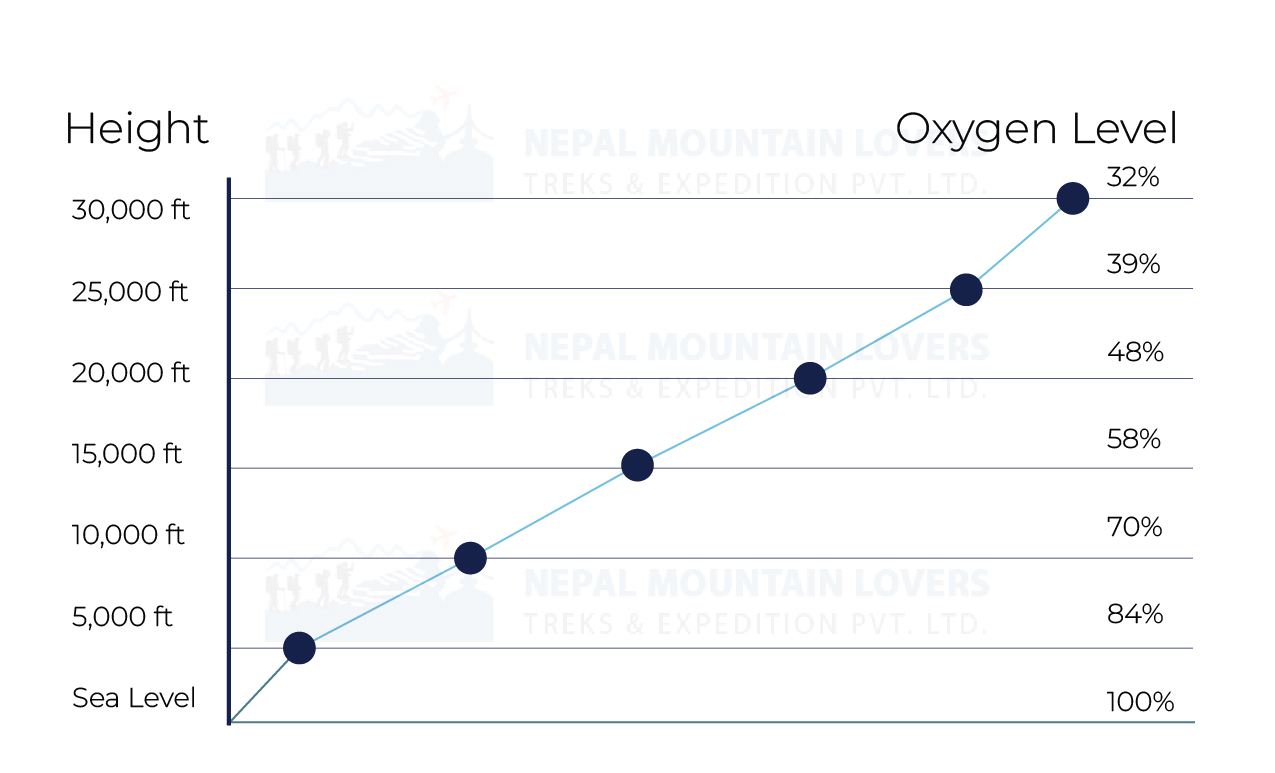
Oxygen Level
From: $740
Talk with a travel expert with more than a decade of experience and plan your adventure.
Gear List
Trekking Equipment & Personal Packing List
Please bring the following essential items for your trek. The exact clothing and equipment needed may vary depending on the trekking region, season, and altitude.
Backpack
A comfortable backpack of around 50 liters with outside pockets for easy access to smaller items.
Trekking Boots
Comfortable, well-broken-in and waterproof trekking boots.
Gaiters are recommended for keeping snow, mud, and water out of your boots.
Clothing
Warm woolen sweater
Down jacket
Warm gloves
Windproof and waterproof outer jacket
Trekking pants
T-shirts and shirts
Comfortable, loose-fitting trousers
Thermal underwear or other warm inner layers
Socks & Footwear
Several pairs of woolen trekking socks
A few pairs of lightweight or nylon socks
A comfortable pair of sandals for use at the campsite or teahouse
Sleeping Bag
A warm sleeping bag suitable for the temperatures expected during your trek.
Sun Protection
Hat or cap with a wide brim
Sunscreen/sun lotion
Sunglasses with good UV protection
Water & Snacks
At least one 1-liter reusable water bottle
Light snacks or energy food for emergencies and long walking days
First Aid & Repair Kit
Personal first-aid and medical supplies
Basic repair kit for clothing and trekking equipment
Any regular personal medication you need
Headlamp
Headlamp or torch
Spare batteries
Personal Toiletries
Handkerchief
Toothbrush and toothpaste
Soap and other personal toiletries
Small personal towel
Important Contact Information
Keep the verified telephone numbers of:
Your country’s embassy or consulate in Nepal
Your trekking agency
Your emergency contact at home
Your trekking guide or trip leader
Writing Materials
Pen and pencil
Small notebook for taking notes or writing an emergency message
Pocket Knife
Small pocket knife with a bottle opener and scissors, where permitted.
Eyewear
Sunglasses
Spare prescription glasses or contact lenses if required
Rain Protection
Lightweight umbrella
Waterproof rain jacket or raincoat
Waterproof cover for your backpack
Camera & Accessories
Camera or smartphone
Spare batteries or a power bank
Extra memory card if needed
SUPPORT
Important Information Before Your Trip to Nepal
Payment
Down Payment:
A 15% deposit of the total trip cost is required to confirm your reservation.
Balance Payment:
The remaining balance can be paid at our office after your arrival in Kathmandu, before the start of your trek.
Airport Arrival & Departure
Arrival in Kathmandu:
Our office representative will meet you at Tribhuvan International Airport, Kathmandu, holding a Nepal Mountain Lovers Treks and Expedition signboard with your name or our company name. We will then arrange your one-time transfer from the international airport to your Kathmandu hotel.
If your flight schedule or travel plans change, please inform us as soon as possible.
Departure from Kathmandu:
We provide one-time transportation from your Kathmandu hotel to Tribhuvan International Airport for your international departure.
Booking Air Tickets
If you do not have a regular travel agent, you may compare international airfares through reputable online travel websites such as MakeMyTrip, KAYAK, or Vayama. We recommend checking the airline’s official website as well before purchasing your ticket.
Trekking Guide
An experienced trekking guide will lead the trek.
Our trekking team will assist you throughout the trek and provide guidance regarding the route, safety, altitude, and daily trekking schedule.
Currencies & Payment Facilities
The major currencies commonly accepted in Nepal include USD, AUD, EUR, GBP and CAD. Credit/debit cards are accepted at many hotels, shops and businesses in major cities, although cash is recommended for trekking areas.
ATMs are available in Kathmandu and other major towns, but ATM facilities may be limited or unavailable in remote trekking areas.
Altitude Sickness
Altitude sickness can occur as you travel to higher elevations, particularly above approximately 2,500–3,000 meters, and individual susceptibility varies.
If you experience symptoms such as headache, dizziness, nausea, unusual tiredness, difficulty sleeping, shortness of breath, or other unusual symptoms, inform your trekking guide immediately.
Do not continue ascending without informing your guide if you feel unwell.
Drinking Water
Bottled and mineral water may be available in Kathmandu and some trekking areas. Boiled water is also available at many teahouses and lodges.
In remote trekking areas, water may need to be treated using water purification tablets, liquid purification, or a suitable water filter.
We recommend carrying a reusable water bottle or hydration system.
Laundry
Laundry services are available in Kathmandu and some larger towns. However, laundry facilities are generally not available during the remote sections of the trek.
Nepal Visa
Most tourists can obtain a visa on arrival at Tribhuvan International Airport in Kathmandu, subject to Nepal’s current immigration requirements and applicable visa fees.
Please check the latest visa fees and requirements before travelling, as government fees and regulations can change.
You should carry:
A valid passport
Passport-size photographs, if required
Appropriate payment for the visa fee
You may also obtain a Nepal visa through a Nepali embassy or consulate before travelling.
Orientation Program
Before starting the trek, our office representative or trekking guide will provide an orientation and briefing covering important information about the trekking route, daily schedule, safety, altitude, accommodation, equipment, and other practical matters.
Group Size
Our standard group size is a maximum of 12 trekkers, unless a different arrangement has been agreed upon in advance.
Food during the Trek
Food during the trek is not included in the package price.
Trekkers can purchase breakfast, lunch and dinner directly at the teahouses and lodges along the trekking route.
A variety of meals may be available, including local Nepali food and some continental or international-style dishes. However, food choices in remote mountain areas are more limited than in Kathmandu and may not be the same as those available in your home country.
Mount Everest Views
The Everest region offers opportunities to see Mount Everest and other Himalayan peaks, depending on the trekking route, weather conditions and visibility.
The Three High Passes Trek provides extensive mountain scenery, including views of Everest, Lhotse, Nuptse, Ama Dablam, Cho Oyu and other peaks.
Travel Insurance
Travel insurance is compulsory for this trek.
Your insurance should cover trekking at high altitude and emergency medical treatment. We strongly recommend insurance that includes emergency helicopter evacuation, if medically required.
Please carry your insurance details with you during the trek.
Personal Expenses
Personal expenses depend on your individual spending habits.
You should budget separately for items such as:
Drinks and snacks
Wi-Fi and charging
Hot showers where available
Laundry
Souvenirs and shopping
Tips
Extra transportation
Emergency or unforeseen expenses
Nepal offers a wide range of handicrafts, including carpets, Thangka paintings, jewellery, traditional handicrafts and other souvenirs.
Luggage
For trekking, we recommend keeping your main trekking luggage to approximately 10 kg per person, unless a different luggage arrangement has been agreed upon.
Excess luggage can usually be stored safely at your Kathmandu hotel while you are trekking.
If you require additional luggage storage or transportation arrangements, please inform us in advance. Any additional cost will be paid separately.
Tips
Tipping is customary and appreciated in Nepal’s trekking industry. The amount is entirely at the discretion of the guest and may depend on the quality of service, group size and length of the trek.
Rules & Regulations
Nepal Mountain Lovers Treks and Expedition accepts your reservation under the following terms and conditions:
- Balance Payment
The remaining balance must be paid after your arrival in Kathmandu and before the trek begins, according to the agreed payment schedule.
If the required balance is not paid before departure for the trek, the company reserves the right to cancel the booking without refund of amounts already paid.
- Emergency, War or Unforeseen Situations
If a war, major political emergency, natural disaster, government restriction, or other serious situation makes travel to Nepal unsafe before your arrival, we will inform you and discuss the available options regarding your reservation and payments.
If an emergency, natural disaster, political situation, war, or other unforeseen event occurs after your arrival or during the trek, the itinerary may need to be changed, shortened, extended, or cancelled for safety reasons.
In such circumstances, we will make every reasonable effort to assist you and arrange the safest practical alternative. Any additional costs arising from such changes may need to be paid by the guest, depending on the circumstances and the services involved.
- Government Fees and Additional Charges
If the Nepal Government or relevant authorities increase fees, royalties, permits, national park charges, or other mandatory costs after your booking, the additional amount may be payable by the guest.
- Illegal Activities and Group Safety
Guests must follow Nepalese laws and the instructions of the trekking guide and company representatives.
If a guest engages in illegal activities, seriously disturbs the group, or creates a significant safety risk for themselves or others, the company or trekking leader may require the guest to leave the group.
In such circumstances, the guest will be responsible for their own additional transportation, accommodation and other expenses. Refunds will depend on the circumstances and applicable booking terms.
- Complaints and Problems
If you have any complaint or problem during your trek or tour, please inform your trekking guide, tour leader, or our office as soon as possible.
We welcome genuine complaints and will make reasonable efforts to investigate the issue and take appropriate action while the trip is in progress.
- Travel Documents
You are responsible for keeping all required travel documents safe and available throughout your trip.
These may include:
Passport
Nepal visa
Travel insurance documents
Flight tickets
Permits or relevant travel documents
Emergency contact information
Please ensure that your passport is valid for the required period before travelling to Nepal.
Important Note About the US$740 Package
The US$740 package covers the trekking services specifically stated on the package page. It does not include food during the trek, teahouse/lodge accommodation during the trek, domestic flights, the guide’s domestic flights, or domestic airport transportation.
The package includes only:
One-time international airport pickup: Kathmandu International Airport → Kathmandu hotel
One-time international airport drop-off: Kathmandu hotel → Kathmandu International Airport
3 nights hotel accommodation in Kathmandu
Trekking guide and the other services specifically listed under “Included”
All other personal, domestic transportation and excluded costs are payable separately by the guest.
0 of 5 | 0 Review
Everest Region Trekking


9 travellers are considering this tour right now!