
Duration
7 Days
DIFFICULTY
Moderate
GROUP SIZE
1-12
MAX. ALTITUDE
3790m
Best Season
Spring & Autumn
Accomodation
Hotel
Meals
Breakfast,Lunch,Dinner
Walking per day
6 hours
Overview
Everest Panorama Trek: A Journey to the Heart of the Himalayas
Imagine waking up to the sound of rustling prayer flags and the soft murmur of mountain breezes whispering through ancient pines. You step outside your teahouse into the crisp morning air, and there it is—Mount Everest, rising like a silent guardian over the Khumbu Valley, framed by the equally majestic peaks of Ama Dablam, Thamserku, and Lhotse. This isn’t a dream. This is the Everest Panorama Trek—a journey designed for those who seek the grandeur of the world’s tallest mountains without the long and arduous route to Everest Base Camp.
Unlike the full base camp trek, the Everest Panorama Trek takes you on a shorter, gentler path through the heart of Sherpa country. Starting with a thrilling flight to Lukla, the trail winds through charming mountain villages like Phakding and Namche Bazaar, where tradition and adventure meet. Here, yaks roam freely, colorful prayer wheels spin in the wind, and every smiling local greets you with a heartfelt “Namaste.”
The cultural experience is as rich as the landscapes are breathtaking. Namche Bazaar, the unofficial capital of the Khumbu region, is a vibrant hillside town where traders, trekkers, and monks cross paths. You’ll explore bustling local markets, enjoy warm Sherpa hospitality, and perhaps sip tea while gazing out at the snow-capped horizon from your lodge balcony.
But the true crown jewel of the trek is your arrival at Tengboche Monastery. Nestled at 3,867 meters, this spiritual sanctuary sits like a jewel among giants, offering one of the most iconic panoramic views in the entire Himalayas. Here, surrounded by chanting monks and flapping prayer flags, you’ll witness the sun rise over Everest’s summit—its golden glow touching the white peaks in a display so surreal, it silences even the most seasoned travelers.
The Everest Panorama Trek is not just about views—it’s about connection. Connection to nature. To a rich Himalayan culture. To yourself. It’s a journey that proves you don’t have to reach Base Camp to feel the spirit of Everest. With moderate hiking, shorter days, and lower altitudes, this trek is perfect for families, first-time trekkers, and anyone short on time but full of wonder.
In just a few days, you’ll collect memories that last a lifetime—of smiling faces, starlit skies, and the unforgettable sight of the world’s tallest peak standing quietly before you.
Everest panorama trek is a short trek with the wonderful views of the Mt. Everest, Lotse, Ama Dablam and many other snow peaks. We trek until Tengboche via Syanboche where we get the Syanboche airport, the highest airport in the world. From Syanboche we can observe the beautiful views of Khumjung and Khunde village. Khumjung (3,780m) is the largest village in Khumbu that presents you wonderful mountain views. The original Hillary school, established by Sir Edmund Hillary in 1961, is in the middle of Khumjung. There is a impressive Gompa in Khumjung village from where we can view Ama Dablam, the rocky pyramid of Thamserku and crags of Khumbila.
The Khunde village (3,840m) is famous for Khunde Chamkang, a Buddhist temple. Inside the temple is a statue of thousand-armed Avalokitesvara, the Tibetan god of compassion, who is represented on earth by Dalai Lama. The popular Namche Bazar, the capital city of the Sherpas, is also a main attraction of this trek. The ‘Saturday Market’ at the bottom of Namche is interesting for tourists to get a chance to socialize and shopping
Everest Panorama Trek – 7 Days Itinerary
The Everest Panorama Trek offers a shorter, easier alternative to the classic Everest Base Camp trek, ideal for those seeking stunning Himalayan views without the strenuous ascent to high altitudes. This journey is perfect for families, first-time trekkers, or those with limited time.
Day 1 :Arrival at the Kathmandu international airport
Day 2 :Flight from Kathmandu to Lukla
Day 3 :Trek to Namche Bazaar
Day 4 :Trek to Tengboche via Everest view hotel.
Day 5 :Trek back to Lukla
Day 6 :Fly back to Kathmandu and farewell dinner with Nepali cultural program.
Day 7 :Drop off at the airport
Trip Overview:
Duration: 7 Days
Max Altitude: 3,860m (Tengboche)
Difficulty: Moderate
Best Season: March–May & September–November
Start/End Point: Kathmandu
Trip Highlights
-
Scenic mountain flight from Kathmandu to Lukla
-
Stunning views of Mount Everest, Lhotse, Ama Dablam & Thamserku
-
Cultural stops in Sherpa villages like Namche Bazaar
-
Visit the iconic Tengboche Monastery with a panoramic Himalayan backdrop
-
Short and beginner-friendly compared to the full Everest Base Camp trek
- Ideal short trek with lower altitude risks
Everest Panorama Trek Difficulty
The Everest Panorama Trek is regarded as a moderately easy trek, making it suitable for individuals who wish to enjoy the stunning scenery of the Everest region without the rigorous demands associated with the complete Everest Base Camp trek.
Who is it suitable for?
This trek is ideal for:
– Beginners possessing a reasonable level of fitness
– Families and older travelers
– Those with limited time available in Nepal
– Trekkers desiring magnificent Himalayan vistas without facing extreme altitudes
Elevation and Altitude
The highest elevation reached on the Everest Panorama Trek is Tengboche Monastery, which stands at 3,867 meters (12,687 feet). Although the altitude is considerable, it typically remains below the threshold where most individuals encounter severe altitude sickness, rendering it a safer option for novice trekkers.
Trail Conditions
The trekking paths are well-marked and well-maintained, leading through picturesque Sherpa villages, lush forests, and across suspension bridges spanning rivers. While there are some uphill stretches and stone staircases, no technical climbing expertise is required.
Acclimatization
Even though the altitude is lower compared to other treks in the area, it is still advisable to maintain proper pacing and include rest days. Attuning to your body, ensuring adequate hydration, and taking your time are essential practices.
In summary:
The Everest Panorama Trek provides a low-risk, high-reward experience, showcasing breathtaking mountain views, including that of Everest itself, without imposing extreme physical challenges. It serves as an excellent option for a brief, scenic adventure in the Himalayas.
Start Your Everest Journey Today
Don’t just dream of Everest—see it for yourself. The Everest View Trek brings you face-to-face with the world’s highest peaks in just a few days. Join us for a life-changing Himalayan adventure!
Contact Us : info@nepalmtlovers.com to
Location and Accessibility:
Region: Khumbu (Everest) Region, Sagarmatha National Park, Nepal
Coordinates: Near the village of Syangboche, above Namche Bazaar
Access Point: Most visitors reach Everest View Point on a short trek from Namche Bazaar.
Time to Reach: Approx. 2–3 hours walk (round trip) from Namche Bazaar
For those with limited time or trekking capacity, helicopter tours from Kathmandu or Lukla also offer quick flybys or landings at or near Everest View Point.
Best Time to Visit:
Spring (March–May): Clear skies, blooming rhododendrons, and moderate temperatures
Autumn (September–November): Crystal-clear visibility and stable weather
Winter (December–February): Fewer tourists and stunning snow-covered peaks, though colder conditions
Monsoon (June–August): Less recommended due to clouds and rain, limiting visibility
What to Expect:
Altitude: Moderate challenge due to thin air at nearly 3,900m—suitable for average fitness levels
Scenery: 360-degree views of snowcapped peaks, deep valleys, and alpine forests
Wildlife: Possible sightings of Himalayan Thar, musk deer, and various bird species
Photography: A dream spot for photographers capturing sunrise or golden-hour views of Everest
Tips for Visitors:
Start Early: Mornings offer the clearest views before clouds roll in by afternoon.
Acclimatize Properly: Stay in Namche Bazaar at least one night before the hike to avoid altitude sickness.
Dress in Layers: Weather can shift rapidly, so wear moisture-wicking and windproof clothing.
Hydrate and Snack: Bring water and energy-rich snacks to maintain energy levels.
Respect Local Culture: Dress modestly and be courteous around monasteries and villages.
Why Visit Everest View Point?
Everest View Point is perfect for travelers who want a taste of the Everest experience without committing to the full trek to Base Camp. Whether you’re a photographer, nature lover, or cultural enthusiast, this site delivers an unforgettable Himalayan experience within a relatively short journey.
Cost breakdown: USD
- Flight ticket from Kathmandu –Lukla-Kathmandu: 237.00*2= US$474.00 per person
- National park conservation fee or permit: 30.00*1= US$ 30.00
- Village development tax: 18.00*1= US$18.00
- Guide wage: 25.00*1= US$25.00 Per day
- Porter Wage: 20.00*1=US$ 20.00 per day
- All food and hotel during the trek: 35.00*1=US$ 35.00 per day
- Office service charge = Negotiable
Note: The cost of one meal is 7-10 US$ and accommodation in trekking is US$ 5-10.
Itinerary
-
Day 1 :
Arrival at the Kathmandu international airport
Arrival at the Kathmandu international airport. You will be picked up by our office representative and transfer to the hotel.
-
Day 2 :
Flight from Kathmandu to Lukla
A 35-minute flight from Kathmandu to Lukla (2,700m). Take breakfast in the nice restaurant with beautiful views of surrounding mountains. Then a five-hour trek to Monjo (2600m) starts from Lukla. The trail is almost flat and little up and down. On the way, you will see complex of ‘mani walls’ and ‘chortens’ and brightly painted ‘prayer wheels’. Overnight stay at the hotel in Monjo located at the bank of Dudh Koshi River.
-
Day 3 :
Trek to Namche Bazaar
You will enjoy your breakfast with wonderful surrounding greenery. At 7am, our trekking starts to Namche Bazaar (3450m). We walk about a one-hour through flat trail and three hours uphill trail to Namche Bazaar.
-
Day 4 :
Trek to Tengboche via Everest view hotel.
After breakfast, five hours trek to Tengboche. Tengboche is very popular for Tengboche Monastery. You can participate in Praying and meditation. At late afternoon trek back to Khumjung village.
-
Day 5 :
Trek back to Lukla
After breakfast, trek back to Khumjung. Khumjung is the beautiful Sherpa village with Kunde monastery. Where tourists could view the scalp of Yeti. Keep walking continue till lukla. All together it will take 8 hours to lukla.
-
Day 6 :
Fly back to Kathmandu and farewell dinner with Nepali cultural program.
Fly back to Kathmandu and farewell dinner with Nepali cultural program.
-
Day 7 :
Drop off at the airport
Drop off at the airport and departure for selected destination
Map

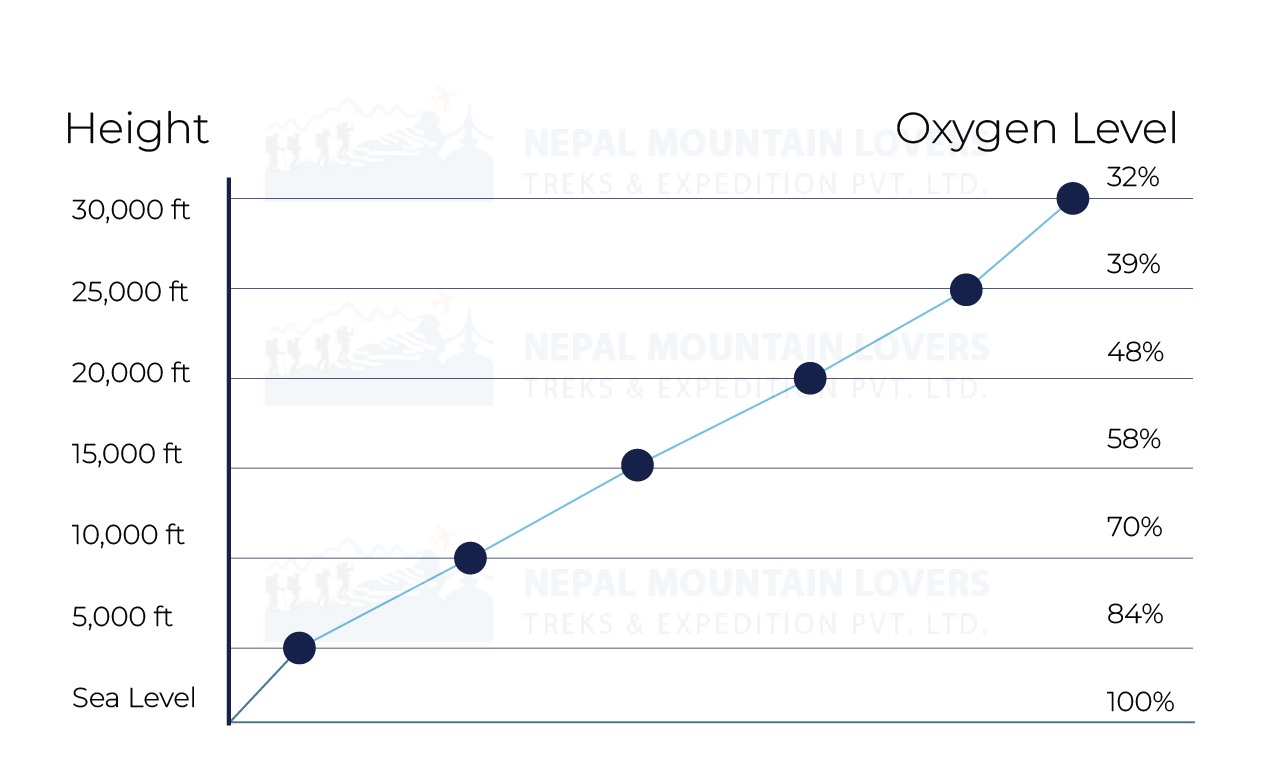
ALTITUDE CHART
Oxygen Level
From: $714
Cost Includes
- Flight ticket from Kathmandu –Lukla-Kathmandu
- National park conservation fee or permit
- Village development tax
- Guide wage and his insurance
- Office service charge
- 2 nights hotel in Kathmandu
- Airport pick up and drop off
Cost Excludes
- International air ticket, airport tax and Nepal visa fees
- All kinds of drink during trekking and travel stay with us
- Travel insurance and cost of medical services of tourists
- All kinds of cloth and personal trekking equipment
- Other personal expenses and tips
- Charted helicopter, plane and other transports in case of emergency
- All kinds of food in Kathmandu and trekking
Note: The cost of one meal is 7-10 US$ and accommodation in trekking is US$ 5-10.
Talk with a travel expert with more than a decade of experience and plan your adventure.
Gear List
Trekking Equipment and Personal Packing List
Please bring the following essential items for your trek:
Backpack: A 50-liter backpack with outside pockets for easy access to smaller items.
Trekking boots: Well-broken-in, comfortable, and waterproof trekking boots. Gaiters are recommended to keep snow, mud, and water out of your boots.
Clothing: Woolen sweaters, a down jacket, warm gloves, windproof outerwear, trekking pants, T-shirts, shirts, comfortable loose-fitting pants, and sufficient underwear.
Socks and footwear: Several pairs of woolen socks and a few pairs of nylon or synthetic socks. Bring a comfortable pair of sandals for use at camps or lodges.
Sleeping bag: A good-quality sleeping bag suitable for the temperatures expected during the trek.
Sun protection: A warm hat or sun hat with a wide brim, sunglasses, and high-SPF sunscreen.
Water bottle: At least one 1-liter reusable water bottle. Carry some light snacks or energy food for emergencies and between meals.
Headlamp: A reliable headlamp with spare batteries. Carry spare bulbs if your model requires them.
Important contact numbers: Keep verified contact numbers for your embassy or consulate, trekking agency, emergency contacts, and family members.
Notebook and pen: Useful for taking notes, recording expenses, or keeping a trekking journal.
Pocket knife: A small pocket knife with a bottle opener and scissors can be useful during the trek.
Eyewear: Sunglasses with UV protection. If you wear glasses or contact lenses, bring a spare pair or additional lenses.
Rain protection: A compact umbrella and waterproof raincoat or rain jacket.
Camera: Optional, but recommended if you would like to capture the scenery and memorable moments.
Personal medication: Bring sufficient supplies of any regular or prescribed medicines you normally take.
SUPPORT
Essential Information to Help Your Nepal Trip
Arrival at Kathmandu International Airport
You will arrive at Tribhuvan International Airport (Kathmandu), where our office representative will be waiting for you outside the arrival area. Our representative will display a Nepal Mountain Lovers Treks and Expedition signboard with your name so that you can easily identify them.
If your flight is delayed, cancelled, or your travel plans change, please inform us as soon as possible. We will make the necessary arrangements for your airport pickup.
Nepal Tourist Visa
Most eligible foreign travelers can obtain a Tourist Visa on Arrival at Tribhuvan International Airport in Kathmandu. You can also apply for a visa through a Nepali diplomatic mission before traveling to Nepal.
The current Tourist Visa on Arrival fees are:
15 days – US$30
30 days – US$50
90 days – US$125
You can complete the online visa application before arrival or use the kiosks at the airport. After completing the application, you will receive a submission receipt, which you should keep for the immigration process. Visa fees can be paid at the designated payment counter, and carrying some cash is advisable.
Important: Visa-on-arrival eligibility depends on your nationality. Citizens of some countries must obtain a visa before traveling to Nepal. Please check the latest information from the Department of Immigration of Nepal before your departure.
Payment and Reservation
A 15% advance payment of the total trip cost is required to officially confirm your reservation.
You can make the payment online through our website. Please visit the front page of our website and click “PAY NOW” in the right-hand corner.
Nepal Mountain Lovers Treks and Expedition
Payment of the Remaining Trek Cost
The remaining balance can be paid after your arrival in Nepal. You may pay by cash or through an available online payment method. Please discuss your preferred payment method with our office representative.
Trek Briefing
After you have settled into your hotel, our office representative or trekking team will provide a detailed trek briefing.
The briefing will cover your itinerary, trekking route, accommodation, meals, permits, equipment, safety information, guide and porter arrangements, and other important details about your trek.
Hotel and Accommodation
In Kathmandu and other major cities, we can arrange accommodation ranging from standard tourist hotels to higher-category hotels and resorts, depending on your requirements and package.
During the trek, you will generally stay in tourist-standard teahouses or lodges. For camping treks, accommodation will be provided in tents.
Room Arrangement
Normally, two trekkers share a room when traveling together as friends, couples, or family members.
Single, twin, or family-room arrangements can be provided according to availability and your requirements. A single supplement may apply for solo travelers or those requesting a private room.
Trekking Guide and Support Team
Your trek will be led by an experienced and licensed trekking guide, supported by porters and other necessary staff.
For camping treks, we provide a larger support team consisting of trekking guides, assistant guides, porters, cooks, Sirdars, and helpers, depending on the size and nature of the expedition.
Accepted Currencies
Major foreign currencies such as US Dollar (USD), Australian Dollar (AUD), Euro (EUR), Canadian Dollar (CAD), and British Pound Sterling (GBP) can be exchanged in Nepal.
Nepalese Rupees (NPR) are used for everyday payments in Nepal. We recommend carrying some local currency, particularly when traveling to remote trekking areas.
ATMs and Cash
ATMs are widely available in Kathmandu, Pokhara, and other major towns. Some trekking areas also have ATMs, but services can be limited and machines may occasionally be unavailable or out of cash.
For remote and high-altitude treks, we recommend carrying sufficient Nepalese cash for personal expenses and emergencies.
Drinking Water
In Kathmandu and other cities, bottled, filtered, and boiled drinking water is widely available.
During trekking, bottled, boiled, and filtered water may be available at lodges and teahouses. In some mountain areas, natural spring or tap water may also be available, but its safety can vary.
For environmental reasons, we encourage trekkers to refill reusable water bottles and use an appropriate water purification method, such as purification tablets or a reliable water filter, rather than depending on single-use plastic bottles.
Food
A variety of Nepali, Tibetan, Indian, and international/continental food is available in Kathmandu, Pokhara, and popular trekking areas.
Traditional Nepali meals commonly include dal (lentil soup), rice, vegetables, pickles, and salad. Non-vegetarian meals may include chicken, meat, or fish, depending on the location and availability.
You can also try popular local cuisines such as Newari and Thakali food, which are well known in Nepal.
During trekking, food choices become more limited at higher elevations, but most established trekking lodges provide a selection of meals suitable for trekkers.
Laundry Service
Laundry services are readily available in Kathmandu, Pokhara, and other major towns. Laundry facilities are generally limited or unavailable in remote trekking areas, so we recommend carrying enough clothing for the duration of your trek.
Group Size
Our standard trekking groups normally have a maximum of 12 people.
If your group has more than 12 participants, we may divide the group into two trekking groups for operational and safety purposes. The groups can still travel along the same itinerary and coordinate with each other where appropriate.
High-Altitude Sickness
Altitude sickness can affect trekkers as they gain elevation, particularly above 3,000 meters, although symptoms can occasionally occur at lower elevations.
Our trekking itineraries are designed to allow appropriate acclimatization wherever possible. Please immediately inform your guide if you experience symptoms such as headache, dizziness, nausea, unusual tiredness, difficulty sleeping, or shortness of breath.
Your guide will assess the situation and advise you on the appropriate steps. In serious cases, descending to a lower altitude is the most important treatment.
First Aid and Personal Medicine
Our trekking team carries a basic first-aid kit for common trekking-related problems.
If you regularly take prescription or other personal medication, please bring a sufficient supply with you. We recommend keeping important medicines in your hand luggage and carrying the prescription or relevant medical information when appropriate.
Travel Insurance
Travel insurance is required for all trekkers.
Your insurance should provide appropriate coverage for trekking activities and, where relevant to your itinerary, high-altitude trekking, emergency medical treatment, evacuation, and trip cancellation/interruption.
Please provide us with a copy of your travel insurance policy or certificate before or upon arrival in Nepal.
Luggage
Our porters normally carry a maximum of 15 kg of personal luggage per trekker.
We recommend bringing only the essential items required for your trek. Any excess luggage that you do not need during the trek can normally be stored safely at our office or at your hotel in Kathmandu, or at the relevant starting point where appropriate.
Views of Mount Everest
Trekkers on the Everest region treks have opportunities to see Mount Everest, depending on the route, weather, and visibility.
Some other trekking routes may offer spectacular Himalayan views but may not provide a view of Mount Everest. If seeing Everest is an important part of your Nepal trip, we can also arrange a mountain flight or other suitable Everest-viewing experience, depending on your itinerary.
Personal Expenses
Most essential trekking expenses are covered according to the inclusions listed in your package. However, you should carry some extra money for drinks, snacks, hot showers where available, charging, internet/Wi-Fi, laundry, tips, souvenirs, and other personal expenses.
In Kathmandu and Pokhara, you may also wish to purchase traditional handicrafts, carpets, paintings, jewelry, clothing, and other souvenirs.
Tipping
Tipping is not mandatory, but it is a common way for travelers to show appreciation for the hard work and service provided by trekking guides, porters, drivers, cooks, and other support staff.
Tips are entirely at the discretion of the traveler and should reflect the quality of service received.
Rules and Regulations
Nepal Mountain Lovers Treks and Expedition accepts your reservation under the following terms and conditions:
- Balance Payment
The remaining balance of your trip cost must be paid according to the payment terms provided by our company. Failure to make the required payment may result in cancellation of the booking, subject to the applicable cancellation and refund conditions.
- Political Situation, Natural Disasters and Emergencies
If a war, serious political crisis, natural disaster, government restriction, or other major emergency occurs before your arrival in Nepal and it becomes unsafe or impractical to travel, we will communicate with you regarding the situation and available options. Any refund will be handled according to the applicable booking and cancellation terms.
If an emergency occurs after your arrival or during the trek, we will make every reasonable effort to protect your safety and assist with necessary arrangements. Your itinerary may need to be changed, shortened, extended, or cancelled depending on the circumstances and available transportation, accommodation, rescue, and government services. Refunds, if applicable, will depend on the services already used and the circumstances.
- Government Fees and Permit Charges
If government-imposed fees, national park fees, conservation fees, trekking permits, local taxes, or other mandatory charges increase after your booking has been confirmed, the additional amount may be payable by the traveler.
- Illegal or Unsafe Conduct
Travelers must follow the laws of Nepal and the instructions of their trekking guide and company representatives. If a traveler engages in illegal, dangerous, abusive, or seriously disruptive behavior that threatens the safety or welfare of themselves or other group members, the company or trekking leader may require the traveler to leave the group. Any resulting costs will be the responsibility of the traveler, and refunds will be subject to the applicable booking conditions.
- Complaints and Feedback
If you have any complaint or concern during your trip, please report it to our company representative or trekking leader as soon as possible. We welcome constructive feedback and will make reasonable efforts to resolve genuine problems during the trip.
- Responsibility for Travel Documents
You are responsible for keeping your passport, visa, travel insurance documents, permits, money, and other personal travel documents safe throughout your journey.
We recommend keeping copies of important documents separately from the originals and maintaining digital copies where possible.
0 of 5 | 0 Review
Short and Easy Trekking

13 travellers are considering this tour right now!