
Duration
9 Days
DIFFICULTY
easy
GROUP SIZE
1-12
MAX. ALTITUDE
3210
Best Season
Spring & Autumn
Accomodation
Lodge
Meals
Breakfast, Lunch, Dinner
Walking per day
5
Overview
Ghorepani PoonHill trek-Sunrise Views, Himalayan Landscapes & Local Culture
SPECIAL OFFER — 30% OFF ALL TREK PRICES
9 Days | Poon Hill 3,210 m | Easy to Moderate | Annapurna Region | From US$500 per person
Ghorepani Poonhill trek is the one of the most renowned and picturesque Trekking route in Nepal. It is an easy and short trekking trail too. The views of sunrise and long range of Dhaulagiri Himal and Annapurna Himal is truly magnificent. In Ghorepani poonhill trek trekkers can explore the diverse landscape, waterfalls, typical Nepali villages and Nepali culture of Mountain people who are living in Annapurna region.

Ghorepani serves as a crucial junction on the PoonHill trek, where travelers converge from the Annapurna Circuit, Annapurna Base Camp, and Naya Pul. While Nepal offers numerous trekking routes, this particular trek is ideal for those with limited time who wish to immerse themselves in the trekking experience while enjoying beautiful scenery, culture, traditions, and the daily lives of remote communities.
We are pleased to present a substantial discount on this package for the years 2024 and 2025. Please inquire with us, and we will provide you with an exceptional price while maintaining our commitment to quality service.
The British Gorkha Army is well-known globally, and many individuals from this region have joined its ranks. Those who have had the opportunity to serve in the British Gorkha Army have often earned substantial incomes, leading to migration to cities like Pokhara and Kathmandu, with some even settling in the United Kingdom. Meanwhile, those who have not had the chance to join the British Army often engage in the tourism industry, operating hotels and restaurants.
Ghandruk, another popular village along this trek, features traditional houses and picturesque rice terraces. The local population cultivates seasonal crops, growing rice, corn, and various vegetables during the monsoon, while winter sees the cultivation of wheat, barley, millet, and vegetables such as potatoes, radishes, and beans.
The best time for Ghorepani Poonhill trekking is in October to December. In this time the weather is pleasantly mild, neither too hot nor too cold. Most of the measure Nepali festivals are celebrated in October to December. All Nepali people they cleaned their houses thoroughly .Marigold flowers are very important for these festivals. They made garlands of flowers and used in festivals. It is considered auspicious. The courtyards of homes are adorned with various types of marigold blooms. You will experience the beauty of trekking. In March and April, the whole forest looks pink in color due to the blooming of Rhododendron flowers. Now day’s trekkers can find comfortable with private bath room at each destination along the trek except one night at Tadapani.
Why Choose the Ghorepani Poon Hill Trek?
Poon Hill is not only a viewpoint; the journey to reach it is part of the experience. You walk through the foothills of the Annapurna range, stay in locally operated lodges and pass through villages where agriculture, tourism and traditional lifestyles continue side by side.
The route is also relatively accessible compared with longer Himalayan treks. The maximum elevation is 3,210 meters, and there are no technical climbing sections.
The trail is suitable for travelers who have a reasonable level of fitness and are comfortable walking several hours each day. The famous stone staircase section between Tikhedhunga and Ulleri is the most demanding part of the ascent, but the trek can be adjusted according to your pace and transportation options.
Poon Hill Sunrise and Himalayan Panorama
The early morning hike to Poon Hill is the defining experience of this trek.
You normally leave Ghorepani before sunrise and walk for around 40 minutes to reach the viewpoint. As the sky begins to brighten, the mountains gradually appear above the surrounding ridges.
On a clear morning, the panorama includes:
Dhaulagiri
Annapurna I
Annapurna South
Annapurna II and surrounding Annapurna peaks
Machhapuchhre (Fishtail)
Nilgiri and other Himalayan peaks
The exact visibility depends on weather and seasonal conditions, but sunrise from Poon Hill is one of the major reasons travelers choose this route.
Forests, Waterfalls and Traditional Villages
The trek passes through changing landscapes as the elevation increases. Lower sections of the trail feature cultivated hillsides, streams and waterfalls, while higher sections enter dense forests of rhododendron, oak and other Himalayan vegetation.
During March and April, rhododendrons bloom throughout the forests. Depending on elevation and flowering conditions, the hillsides can appear covered with red, pink and other shades of rhododendron flowers.
The autumn months offer a different experience, with generally clearer mountain views and comfortable trekking conditions.
Experience Mountain Village Life
One of the special features of the Ghorepani Poon Hill route is the opportunity to walk through traditional settlements and observe the daily life of mountain communities.
Ghorepani is an important stopping point and historic trail junction in the Annapurna region. The name is commonly associated with horses and water, reflecting the area’s traditional role as a place where travelers and pack animals could stop for water.
Ghandruk is another important village on the route. The settlement is known for its traditional houses, terraced fields, mountain views and Gurung cultural heritage.
Agriculture remains an important part of village life. Depending on altitude and season, local farmers cultivate crops such as rice, maize, wheat, barley, millet, potatoes, beans and other vegetables.
Tourism has also become an important source of income. Many local families operate teahouses, lodges, restaurants and other tourism-related businesses.
Ghandruk and Gurung Culture
Ghandruk provides an opportunity to see a traditional Himalayan settlement while learning about the culture and lifestyle of the local Gurung community.
Visitors may see traditional stone houses, terraced farmland and local community buildings. The village is also associated with the history of Gurkha military service, with many people from the surrounding region having served in the British Gurkha and other military forces.
Today, tourism provides another important economic opportunity for local families, particularly through accommodation, restaurants, guiding and trekking services.
Best Time for Ghorepani Poon Hill Trek
The trek can be undertaken in different seasons, but autumn and spring are particularly popular.
October to November
Autumn generally provides pleasant trekking temperatures and good opportunities for clear mountain views. The post-monsoon landscape is fresh, and the trails are generally in good condition.
This period also coincides with major Nepali festivals such as Dashain and Tihar. Travelers visiting villages during festival season may see houses decorated with flowers and local communities celebrating traditional occasions.
Marigold flowers are especially associated with Tihar and are commonly used to decorate homes and make traditional garlands.
December
December can offer clear mountain views, although mornings and nights become colder, particularly at Ghorepani.
March to April
Spring is another excellent period for the trek. Rhododendron forests begin to bloom, creating colorful scenery along the trail.
Days can be comfortable for walking, while mornings and evenings at higher elevations remain cool.
June to September
The monsoon season brings frequent rainfall to the Annapurna region. Trails can become wet and muddy, and clouds may obscure mountain views. Leeches may also be present in some lower, forested sections.
Highlight Ghorepani Poonhill Trek
Spectacular sunrise from Poon Hill (3,210 m) with breathtaking Himalayan views as the first sunlight reaches the surrounding peaks.
Panoramic views of the Annapurna and Dhaulagiri ranges, including Annapurna South, Dhaulagiri, Machhapuchhre (Fishtail), Nilgiri and other Himalayan peaks.
Colorful rhododendron forests, especially beautiful during March and April when the hillsides come alive with spring blossoms.
Traditional Himalayan villages with stone houses, terraced farmland, mountain trails and peaceful rural landscapes.
Authentic Gurung culture and hospitality, particularly around the historic village of Ghandruk.
A glimpse into local mountain life, including traditional farming, village customs, festivals and everyday community activities.
Beautiful natural scenery featuring waterfalls, streams, forests, green hills and changing Himalayan landscapes.
Comfortable teahouse experience, staying in locally operated lodges while enjoying traditional mountain hospitality.
Short and accessible Himalayan adventure, ideal for travelers who want to experience trekking in Nepal without committing to a long expedition.
No technical climbing experience required, making the route suitable for many first-time trekkers with reasonable fitness.
Flexible trekking options, including the possibility of using Jeep transportation on suitable road sections to reduce walking time.
Experienced local trekking guide and organized support throughout the journey for a comfortable and enjoyable trekking experience.
Ghorepani Poon Hill Trek Cost
From US$500 per person
Our pricing is based on group size, allowing larger groups to receive a lower per-person rate.
Group Size Price Per Person
1 person US$500
2 people US$475
3 people US$465
4–6 people US$450
7–12 people US$430
13–16 people US$420
17–25 people US$400
The price includes the services listed below.
A private itinerary can also be arranged if you want to change the duration, transportation or accommodation level.
Cost Includes:
Transportation
Airport–hotel–airport transfers by private vehicle
Kathmandu–Pokhara–Kathmandu by tourist bus
Private vehicle between Pokhara and the trekking trailhead
Private vehicle from the trekking endpoint back to Pokhara
Accommodation
Tourist-standard hotel accommodation in Kathmandu
Tourist-standard hotel accommodation in Pokhara
Daily breakfast during your Kathmandu and Pokhara stays
Local teahouse/lodge accommodation during the trek
Breakfast, lunch and dinner during trekking days
One cup of tea with each trekking meal
Trekking Services
Experienced local trekking guide
Guide/porter support according to the package arrangement
Required trekking permits and applicable government fees
TIMS card
Trekking map
Insurance for trekking staff
Basic first-aid kit
Additional Services
Nepal Mountain Lovers T-shirt
Farewell dinner with Nepali cultural program
Water purification tablets for use during the trek
Bottled mineral water can be purchased during the trek at your own expense.
Cost Excludes:
International airfare
Nepal visa fee
Airport taxes and airline charges
Travel insurance
Medical treatment and evacuation expenses
Personal clothing and trekking equipment
Drinks and beverages other than the meals/services specified above
Personal expenses
Laundry
Tips for guides, drivers and other staff
Emergency helicopter or other emergency transportation
Expenses resulting from circumstances outside the company’s control
Accommodation on the Ghorepani Poon Hill Trek
During the city portion of the trip, you will stay in tourist-standard hotels in Kathmandu and Pokhara.
During the trek, accommodation is provided in local teahouses and lodges. Facilities vary between villages. Many lodges now provide rooms with private bathrooms where available, although facilities are more basic in some locations.
Tadapani and other mountain settlements may have more limited facilities than Ghorepani and the larger villages.
A sleeping bag is generally not essential for this itinerary when adequate blankets are available at the lodges, but travelers who are sensitive to cold may prefer to bring or rent a lightweight sleeping bag.
Is the Ghorepani Poon Hill Trek Difficult?
The Ghorepani Poon Hill Trek is generally considered easy to moderate, but it should not be confused with a completely effortless walk.
The most demanding part of the traditional route is the steep staircase section between Tikhedhunga and Ulleri. There are roughly 3,000–3,200 stone steps in this section.
The route also includes regular uphill and downhill walking, so basic physical preparation is recommended.
Travelers who walk regularly can usually manage the route comfortably by maintaining a steady pace and taking sufficient breaks.
For travelers who want to reduce the walking distance, Jeep transportation is available on suitable road sections, depending on the current road and trail conditions.
Can You Do the Poon Hill Trek Without Walking the Entire Traditional Route?
Yes. Road access has changed the way some travelers approach the Ghorepani area.
Depending on current road conditions and the itinerary selected, a Jeep can travel toward areas such as Ulleri and, in some circumstances, Ghorepani. This can reduce the amount of walking required.
However, travelers choosing the traditional trekking route generally experience more of the forests, villages and mountain trails.
We can arrange the itinerary according to your available time, fitness level and preferred travel style.
What Can You See from Poon Hill?
Poon Hill is famous for its sunrise panorama.
On a clear day, you can see parts of the:
Dhaulagiri range
Annapurna range
Annapurna South
Annapurna I
Machhapuchhre (Fishtail)
Nilgiri and surrounding peaks
Mount Everest cannot be seen from Poon Hill. Everest is located in a different Himalayan region of Nepal.
Altitude and Acclimatization
The highest point reached on this itinerary is Poon Hill at approximately 3,210 meters.
Although this is significantly lower than Everest Base Camp and many high-altitude trekking destinations, some travelers may still experience symptoms related to altitude.
Walk at a comfortable pace, drink sufficient water and inform your guide immediately if you experience unusual headache, dizziness, nausea, breathing difficulty or other concerning symptoms.
Your guide will monitor your condition throughout the trek.
What to Pack for the Poon Hill Trek
For this short trek, you do not need an expedition-style equipment list.
Recommended items
Comfortable trekking boots
Daypack
Warm fleece or sweater
Lightweight down or insulated jacket
Waterproof jacket/rain protection
Trekking trousers
T-shirts and thermal layers
Warm socks
Gloves
Warm hat
Sun hat
Sunglasses
Sunscreen
Water bottle
Water purification tablets
Headlamp
Basic toiletries
Personal medicines
Small first-aid supplies
Trekking poles, if preferred
Camera or smartphone
Small amount of cash
A sleeping bag is optional for this itinerary, although some travelers prefer one for additional warmth.


Outline Itinerary
Day 1:
- Arrival in Kathmandu
- Pick-up from the airport and transfer to the hotel
Day 2:
- Rest and leisure day in Kathmandu
Day 3:
- Drive from Kathmandu to Pokhara (827m) — Approx. 6 hours
Day 4:
- Drive to Nayapul (1,070m) — Approx. 1 hour
- Trek to Tikhedhunga (1,540m) — Approx. 4 hours
Day 5:
- Trek from Tikhedhunga to Ghorepani (2,835m) — Approx. 6 hours
- Overnight stay at a hotel
Day 6:
- Trek from Ghorepani to Tadapani (2,590m) — Approx. 5 hours
Day 7:
- Trek to Nayapul via Ghandruk (1,940m) — Approx. 6 hours
- Drive back to Pokhara — Approx. 1 hour
Day 8:
- Drive from Pokhara to Kathmandu (1,400m) — Approx. 6 hours
Day 9:
- Departure from Kathmandu
Pricing (Per Person)
1 Person: $500
2 People: $475 each
3 People: $465 each
4–6 People: $450 each
7–12 People: $430 each
13–16 People: $420 each
17–25 People: $400 each
Included Services:
Transportation:
-
Private vehicle transfers: Airport–hotel–airport.
-
Kathmandu–Pokhara–Kathmandu by tourist bus.
-
Pokhara to trekking starting point and return (end point to Pokhara) by private vehicle.
Accommodation:
-
Tourist-standard hotel in Kathmandu and Pokhara, including daily breakfast.
-
During the trek: Accommodation in local lodges/tea houses (tourist standard) with all meals—breakfast, lunch, dinner—and one cup of tea per meal.
Trekking Support:
-
Experienced trekking guide (also serving as a porter).
-
All necessary national park entry fees and government royalties.
-
Insurance for trekking staff.
-
TIMS (Trekkers’ Information Management System) card.
-
Trekking map.
-
First aid kit.
Extras:
-
Nepal Mountain Lovers T-shirt (souvenir).
-
Farewell dinner with cultural program in Kathmandu.
Drinking Water:
-
We provide water purification tablets for safe drinking water during the trek.
(If you prefer bottled mineral water, it is available at your own expense.)
Cost Excludes:
-
International airfare, airport taxes, and Nepal visa fees
-
All types of beverages during the trek and throughout your stay with us
-
Travel insurance and any medical expenses incurred by tourists
-
Personal clothing and trekking equipment
-
Other personal expenses and gratuities (tips)
-
Chartered helicopter, airplane, or other transportation in case of emergency
Frequently ask questions about Ghorepani poonhill trek:
1. How long is the Ghorepani Poon Hill trek?
The trek typically takes 4 to 5 days, depending on your pace and itinerary.
2. How much does it cost to do the Ghorepani Poon Hill trek?
On average, it costs $200–$500 USD, including permits, accommodation, food, and transportation from Pokhara.
3. How many steps to Ghorepani?
There are approximately 3,200 stone steps from Tikhedhunga to Ulleri on the way to Ghorepani.
4. How difficult is Poon Hill Trek?
It is considered a moderate trek. Suitable for beginners with average fitness, but the steps and altitude can be challenging.But if you want to by Jeep you can go till Ghorepani.We have daily sightseeing tour to Ghorepani from Pokhara and Kathmandu.
5.How much does the Ghorepani poonhill trek cost?
The cost of the Ghorepani Poon Hill trek ranges from $200 to $500, depending on whether you go with a guide, porter, or independently.
6. Can you do Poon Hill in 2 days?
Yes, it’s possible with a tight itinerary starting early from Pokhara, but 3–4 days is more comfortable and recommended.You can do from Kathmandu too but you have to use flight from Kathmandu-Pokhara-Kathmandu.
10. How many steps to Ghorepani / on Poon Hill Trek?
The main section from Tikhedhunga to Ulleri has about 3,200 steps, which is the most challenging part of the ascent.But other parts of trekking also there are regular small steps till Poonhill.
11. How difficult is Poon Hill Trek?
It’s a moderate trek. Manageable for most people, but involves steep climbs and long walking days.The difficult part is from Tirkhedhunga to Ulleri where about 3200 steps are.But now days there is regular Jeep service till Ulleri.
12. How much does the Ghorepani trek cost?
The trek typically costs between $200 to $500, depending on your travel style and services used.
14. What time is sunrise at Ghorepani Poon Hill?
Sunrise is usually between 5:15 to 6:00 AM, depending on the season.
15. Do you need a sleeping bag for Poon Hill Trek?
No, you don’t need one. These days, there are many good hotels and lodges on the trek. They provide warm blankets.
16. Can I see Everest from Poon Hill?
No, Everest is not visible from Poon Hill. However, you can see Dhaulagiri, Annapurna, Machhapuchhre, and other peaks.
23. Where is the best view of Everest from Kathmandu?
From Nagarkot or on a mountain flight from Kathmandu, you can view Everest.
24. Can you trek Poon Hill without a guide?
Yes, it’s a popular and well-marked trail, suitable for independent trekking with proper preparation.
25. How far is Ghorepani from Kathmandu?
It’s about 275 km by road and trek, typically a 6–8 hour drive to Pokhara, then 2–3 days of trekking.
26. What to do in Ghorepani?
Relax, acclimate, enjoy views of the Annapurna range, explore the village, and prepare for the early morning hike to Poon Hill.
27. How high is Ghorepani?
Ghorepani is at an altitude of 2,874 meters (9,429 ft).
28. How far is Ghorepani from Ghandruk?
It’s about 10–12 km, typically a 8-10 hour trek depending on your pace.
29. What is the weather like in Ghorepani in October?
October has clear skies and mild temperatures, ideal for trekking. Daytime is around 10–20°C, with colder nights.
30. What is the shortest Poon Hill trek?
The shortest possible version is 2 days/1 night from Pokhara, but it’s very rushed.
31. What to pack for Poon Hill Trek?
Essentials include:
Hiking boots
Warm layers
Sleeping bag
Rain jacket
Water purifier
Sunscreen/sunglasses
Trekking poles (optional)
32. What is the 2-day trek from Pokhara?
The 2-day Poon Hill trek includes a drive to Nayapul, trek to Ulleri or Ghorepani, sunrise at Poon Hill, then return.
33. Can you get altitude sickness at Poon Hill?
It’s unlikely at 3,210 m, but some may feel mild symptoms. Hydrate well and ascend gradually.
34. How to go Ghorepani?
From Pokhara, drive to Nayapul or Ulleri, then trek via Tikhedhunga and Ulleri to Ghorepani or you can drive by Jeep to Ghorepani.
35. Can you see Manaslu from Poon Hill?
Yes, on a clear day, Manaslu can be seen from Poon Hill, though it’s less prominent than Annapurna or Dhaulagiri.
36. How long does it take to trek Poon Hill?
Most itineraries take 4–5 days round trip from Pokhara.
37. How many kilometers is the Poon Hill trek?
The total trek is around 40–55 kilometers, depending on your route and detours.
38. How many days is the Poon Hill Trek?
Typically 4 to 5 days, though shorter or longer versions exist.
Itinerary
-
Day 1 :
Pick up from the airport and transfer to hotel.
One of our office representative will be waiting you at the exit point of airport holding your name on a shine board. Then it is easy to you to recognize a right person who came to pick up you at the exit point. As you completed your visa process the immigration officer will give you visa and show the exit point and you will come out. If you have already got the visa from the embassy of Nepal in your country you have to show it at the visa desk and it is easy. If there is no embassy in your country you can fill out online visa form in your country. It will make you faster to get a arrival visa in airport .As you come out you will see our representative easily and he will keep you in our private car and brought to hotel. The road is about 7 km but due to city area and traffic jam it might take about 20 minutes to come to hotel. As you will arrive to hotel welcome drinks is offered and you have to make check in. Then we will make one hour break. You can go to your room and have rest. After one hour we will meet at the hotel lobby and our representative will explain about your tour and trekking gears and about your trip. If you do not have proper trekking gears he will assist you to buy. He will explain you departure time of Pokhara. During your stay in Kathmandu it is not included your Lunch and Dinner. Our office representative will mention you some names of nice restaurant or you can eat in your hotel where you are staying. They also provide nice food and you have to pay the bills yourself. But the accommodation and breakfast is included in this package. He will explain you dos and don’ts in Nepal
-
Day 2 :
Rest in Kathmandu
Today, you will have the opportunity to rest, and in the afternoon, there will be an introductory program with your guide. The guide will assess whether you possess the necessary equipment for trekking. Additionally, we will gather all insurance documents and the contact numbers of your nearest relatives in case of an emergency. Lunch and dinner is not included. Hotel and Breakfast is included in Package.
-
Day 3 :
Drive to Pokhara (827m)
Duration: 6 hours (200 km)
About 6 hours drive to Pokhara and stay overnight.Pokhara is the most naturally beautiful place in Nepal. It is one of the most charming spots in Nepal and is known as a hub of adventure. This valley, situated 200 km west of Kathmandu, has been the base camp for Nepal’s most popular trekking and rafting destinations. Lake Phewa, Begnas, and Rupa, on the lap of the Himalayas, are the beauties of this valley. Lunch and dinner is not included.
Hotel and breakfast is included.
Kathmandu – Pokhara distance 200 kilometers
-
Day 4 :
Drive to Nayapul (1,070m) & Trek to Tikhedhunga (1,540m)
Drive Duration: 1 hour (40 km)
Trek Duration: 4 hours (10 km)
Breakfast will be followed by approximately a one-hour drive along a mountainous road to Nayapul, where the trek will commence. The road to Nayapul is well-maintained and offers scenic views. Nayapul is a significant point for trekkers heading to Annapurna Base Camp or embarking on a short trip to Ghandruk, as many tourists utilize this route. However, since the plan is to proceed to Ghorepani poonhill trek, we will take the left-hand trail. Those aiming for Ghandruk and Annapurna Base Camp will follow the right-hand path. This marks the first day of trekking, characterized by a gradual ascent, making it relatively easy. Along the way, you will encounter traditional houses nestled in the villages that dot the sloped mountains. After approximately four hours of trekking, you will reach Trikhedhunga (1,540m), where you will stay overnight at a hotel. The package includes breakfast, lunch, dinner, and accommodation.
-
Day 5 :
Breakfast–about 6 hrs trek to Ghorepani (2,835m). Stay overnight at hotel
Duration: 6 hours (13 km)
Following breakfast, the trek to Ghorepani (2,835m) will take around six hours. The initial three hours of the trek will be particularly challenging due to the steep ascent at Ulleri, a well-known section of the trail. You will need to navigate this steep path for the entire duration. Upon reaching Banthati, there will be a one-hour lunch break, during which you can enjoy your first view of Annapurna South. After lunch, the trek continues for another three hours to Ghorepani poonhill trek, where the trail gradually ascends. Ghorepani serves as a crucial junction in the Annapurna region, where trekkers from the Annapurna Circuit, Annapurna Base Camp, and Nayapul converge. Historically, this area lacked hotels and tea houses, and it was a place where horses were watered, leading to the name Ghorepani, derived from “ghore” meaning horse and “pani” meaning water. You will stay overnight at a hotel in Ghorepani, with breakfast, lunch, dinner, and accommodation included in your package.
-
Day 6 :
After breakfast about 5 hours trek to Tadapani.(2590 m)
Duration: 5-6 hours (10 km)
Start early with a 40-minute hike to Poon Hill (3,210m) for one of the best sunrise views in the Annapurna region. From the top, you will witness breathtaking views of the Annapurna (8,091m) and Dhaulagiri (8,167m) mountain ranges. After enjoying the sunrise, return to Ghorepani for breakfast. Then, begin the trek to Tadapani (2,590m), passing through a trail filled with ascents and descents through lush forests and small villages. -
Day 7 :
Trek to Nayapul via Ghandruk (1,940m) & Drive to Pokhara
Trek Duration: 6 hours (13 km)
Drive Duration: 1 hour (40 km)
Today, you begin your descent from Tadapani (2,590m) to Nayapul (1,070m). Along the way, you will pass through the beautiful village of Ghandruk (1,940m), known for its traditional stone houses and cultural heritage. The trek is mostly downhill, providing scenic views of the surrounding valley. Once you reach Nayapul, you will take a one-hour drive back to Pokhara (827m). Spend the evening relaxing by Lake Phewa or enjoy a leisurely walk around the lakeside area. -
Day 8 :
Drive Back to Kathmandu (1,400m)
Duration: 6 hours (200 km)
After breakfast, begin the return journey to Kathmandu (1,400m). The drive offers more scenic views of the countryside and hills, providing a different perspective of the landscapes. Once back in Kathmandu, enjoy a farewell dinner in the evening, complete with a Nepali cultural program, where you can experience traditional Nepali music and dance.
-
Day 9 :
Departure from Kathmandu (1,400m)
After breakfast, one of our representatives will transfer you to Tribhuvan International Airport (1,400m) in a private vehicle. Before departure, you will receive a ceremonial “Khada” (Buddhist scarf) as a symbol of good fortune for your journey ahead. Bid farewell to Nepal and board your flight back home.
Map

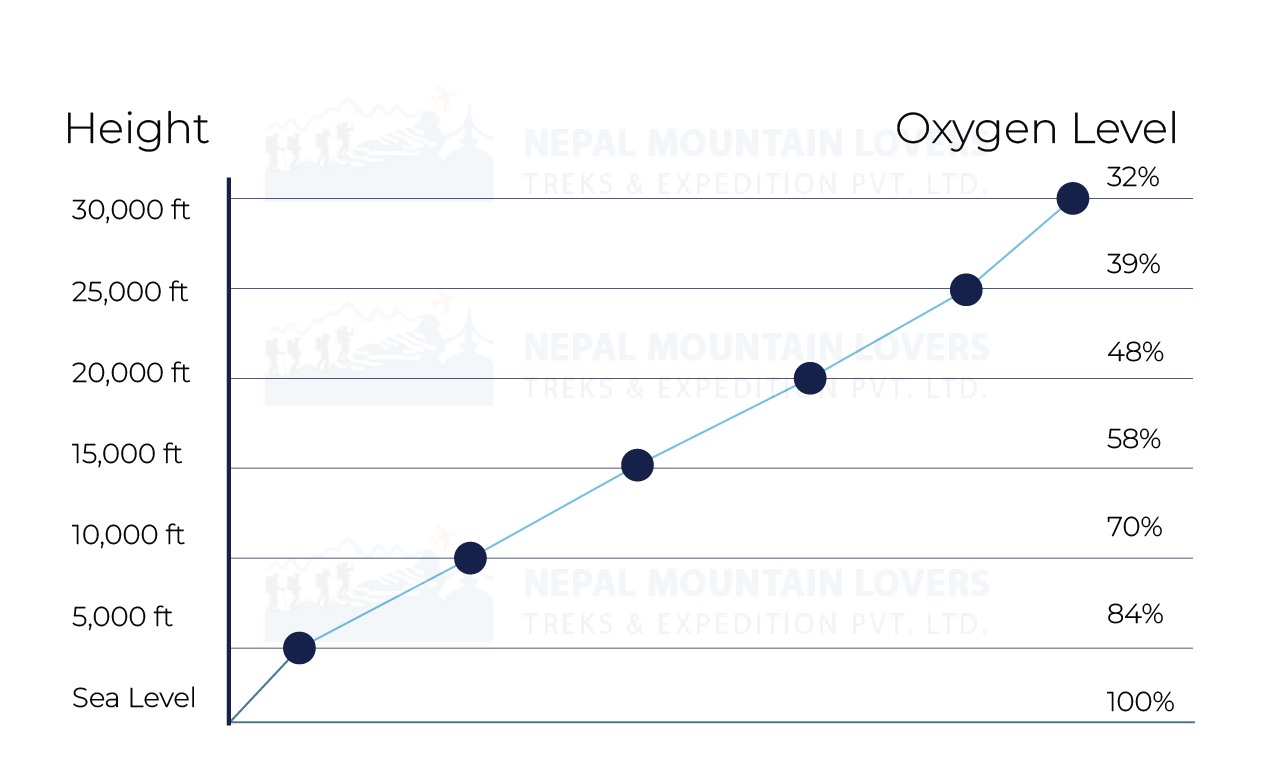
ALTITUDE CHART
Oxygen Level
From: $500
Talk with a travel expert with more than a decade of experience and plan your adventure.
FAQ
The trek typically lasts 7 to 9 days, depending on the specific itinerary. It includes rest days for acclimatization and exploration, ensuring trekkers can enjoy the scenery without rushing.
The trek is considered moderate. While there are some uphill sections, particularly towards Ulleri and Ghorepani, the overall difficulty is manageable for trekkers with average fitness levels. The route is suitable for beginners as well as seasoned trekkers.
The best times to do this trek are during the spring (March to April) and autumn (October to December). These seasons offer clear skies, pleasant temperatures, and stunning landscapes, including the rhododendron forests in bloom during spring.
The Ghorepani Poonhill Trek is a popular trekking route in Nepal known for its breathtaking views, including sunrise at Poon Hill and panoramic vistas of the Annapurna and Dhaulagiri ranges. It offers an opportunity to experience Nepal’s natural beauty and cultural heritage.
The trek is considered moderate. While there are some uphill sections, particularly towards Ulleri and Ghorepani, the overall difficulty is manageable for trekkers with average fitness levels. The route is suitable for beginners as well as seasoned trekkers.
Key highlights of the GhorePani Poonhill trek include the sunrise from Poon Hill, panoramic views of Annapurna and Dhaulagiri, trekking through beautiful rhododendron forests, and visiting traditional villages like Ghandruk.
Poon Hill is located at an altitude of 3,210 meters (10,531 feet) and offers one of the best sunrise viewpoints in the Annapurna region. From here, trekkers can enjoy incredible views of the surrounding Himalayan peaks.
Gear List
- Backpack (50 liters) with outside pockets to keep smaller items
- Trekking boots, well broken in and waterproofed. Gaiters to keep snow out of boots
- Woolen sweaters and down jacket, gloves, wind proof outer garments, pants jacket, skirts, T-shirts, shirts, baggy pants and underwear
- Several pairs of woolen and few pairs of nylon socks. A pair of sandals
- Sleeping bag adequate for temperatures encountered
- Hat with wide brim and sun lotion cream
- One liter water bottle and some food for contingencies
- Repair and medical kit
- Head lamp with spare lithium batteries and bulbs
- Handkerchief and toiletries
- Verified phone number of your Embassy, consulate ,trekking agency and private phone number of your director
- Pen, pencils and letterhead to write an emergency message
- Pocket knife with opener and scissors
- Sunglasses with spare eyeglasses or contact lenses if you wear them
- Umbrella and rain coat
- Camera
SUPPORT
Important Information Before Your Trip to Nepal
To help you prepare for your trip, please read the following information carefully. It covers payment, arrival arrangements, accommodation, trekking support, health and safety, personal expenses, and the terms and conditions of your booking.
- Booking & Payment
Reservation Deposit:
A 15% advance payment of the total trip cost is required to confirm your reservation. Your booking will be considered confirmed once the required deposit has been received.
Payment of the Balance:
The remaining balance can be paid at our office after your arrival in Kathmandu, unless another payment arrangement has been agreed upon in advance.
Please make sure that the full balance is settled before the scheduled departure of your trekking or tour program.
- Airport Arrival & Pickup
When you arrive at Tribhuvan International Airport in Kathmandu, a representative from Nepal Mountain Lovers Treks and Expedition will meet you at the airport.
Our representative will be holding a Nepal Mountain Lovers Treks and Expedition signboard so that you can identify them easily.
If your flight schedule changes, your arrival time is delayed, or you change your travel plans, please inform us as soon as possible so that we can make the necessary arrangements.
- International Air Tickets
If you do not already have a preferred travel agent for booking your international flights, you may compare flight schedules and prices through established online travel platforms such as MakeMyTrip, KAYAK, or Vayama.
We recommend checking several options because airfares can vary depending on the airline, travel date, route, and time of booking.
- Accommodation & Room Arrangements
In Kathmandu and other city areas, accommodation is generally arranged in tourist-standard hotels or resorts.
Normally, two guests share one room. Depending on availability and the selected accommodation, rooms may have twin beds or a double bed.
If you prefer to stay in a private single room, a single supplement will apply.
During trekking, accommodation is generally provided in local teahouses, lodges, hotels, or tents, depending on the trekking region and itinerary.
- Trekking Guide & Support Team
Your trekking program will be led by an experienced licensed trekking guide.
Depending on the size and nature of the group, the guide will be supported by assistant guides, porters, or other local staff.
The trekking team will assist you with route guidance, daily trekking arrangements, accommodation, meals, and general support throughout the journey.
- Currency & Access to Money
The official currency of Nepal is the Nepalese Rupee (NPR).
Major foreign currencies such as US Dollars, Australian Dollars, and Euros can be exchanged at authorized money exchange counters and banks.
Credit and debit cards are accepted at many hotels, restaurants, shops, and businesses in Kathmandu and other major tourist areas. However, card facilities may be limited or unavailable in remote trekking areas.
ATMs are widely available in Kathmandu and other major towns, but you should carry enough Nepalese cash before heading into remote mountain areas.
- Altitude & Acclimatization
Altitude sickness can become a concern as you travel to higher elevations, particularly above approximately 3,000 meters.
Symptoms can include headache, dizziness, nausea, unusual tiredness, loss of appetite, or difficulty sleeping.
Please immediately inform your trekking guide if you experience any unusual symptoms at altitude. Do not hide your symptoms or continue walking without informing your guide.
Your guide will assess the situation and may recommend rest, descent, or other appropriate action when necessary.
- Drinking Water
Safe drinking water is available in different forms depending on the location.
In Kathmandu and major towns, you can purchase bottled or mineral water. In trekking areas, boiled and filtered water may be available at lodges and teahouses.
In more remote areas, drinking water may be treated using water-purification tablets or liquid purification methods.
We recommend carrying a reusable water bottle or hydration system and avoiding untreated natural water unless it has been properly purified.
- Laundry
Laundry services are readily available in Kathmandu and other major towns.
However, laundry facilities are generally limited or unavailable during trekking, particularly in remote mountain areas.
We therefore recommend bringing enough comfortable clothing for the trekking period and packing lightweight, quick-drying clothes whenever possible.
- Nepal Tourist Visa
Many international visitors can obtain a Nepal tourist visa on arrival at Tribhuvan International Airport in Kathmandu, subject to Nepal’s current immigration requirements and eligibility rules.
Visa fees and permitted stay periods can change, so please check the latest requirements before travelling.
You should carry passport-size photographs as a precaution, although current airport procedures may also provide facilities for photographs and visa processing.
Alternatively, eligible travelers may obtain a visa through a Nepali embassy or consulate before travelling.
Please ensure that your passport has sufficient validity for your trip.
- Trekking Orientation
Before starting your trekking program, we will provide a pre-trek orientation at our office or through your trekking guide.
The orientation will cover important practical information such as:
Trekking route and daily itinerary
Walking hours and altitude gain
Accommodation and meals
Weather and clothing
Proper packing of trekking luggage
Altitude-related precautions
Drinking water
Safety procedures
Guide and porter arrangements
Important rules during the trek
You will also have an opportunity to ask questions before beginning your trek.
- Group Size
Our standard trekking groups are limited to a maximum of 12 participants.
A smaller group size allows the trekking team to provide more practical assistance and makes communication within the group easier.
Private trips can also be arranged for travelers who prefer to trek independently with their own guide and support team.
- Accommodation during the Trek
In Kathmandu and other city destinations, you will generally stay in comfortable tourist-standard hotels or resorts.
During trekking, accommodation depends on the destination and availability. Most trekking routes use local teahouses and mountain lodges, while camping may be arranged in areas where lodge accommodation is unavailable.
Facilities in remote mountain areas are more basic than those in Kathmandu. Rooms may be simple, and private bathrooms or hot showers may not always be available.
- Meals & Food
Depending on your package, meals normally include breakfast, lunch, and dinner during the trekking or tour program.
In Kathmandu and major tourist destinations, you can find a wide range of food, including Nepali, Indian, Tibetan, Asian, and continental dishes.
During trekking, local lodges generally offer a selection of familiar and local meals. However, food choices become more limited as you travel into higher and more remote areas.
The food and dining facilities in remote mountain regions may not be comparable to those in your home country or in city hotels. We recommend being flexible and following your guide’s advice regarding food and hydration at higher elevations.
- Viewing Mount Everest
Travelers trekking in the Everest region have opportunities to see Mount Everest from various viewpoints along the trekking route, depending on weather and visibility.
If your itinerary is in another region of Nepal where Mount Everest is not visible, you can consider taking a mountain flight from Kathmandu. Such flights provide an opportunity to view Everest and other major Himalayan peaks from the air, subject to weather and airline operating conditions.
- Travel Insurance
Travel insurance is compulsory for all trekkers and travelers joining our trekking programs.
Your insurance should provide appropriate coverage for the activities and altitude involved in your itinerary.
For trekking in high-altitude regions, we strongly recommend checking that your policy specifically covers high-altitude trekking and emergency evacuation, where applicable.
Please carry your insurance details and emergency contact information with you during the trip.
- Personal Expenses
Personal expenses are not always included in the package price unless specifically mentioned in the itinerary.
Your personal spending may include:
Drinks and beverages
Snacks
Telephone or internet services
Laundry
Souvenirs
Shopping
Optional activities
Tips
Personal equipment or services
Nepal offers a variety of locally produced handicrafts, including traditional carpets, Thangka paintings, jewelry, wood carvings, handmade products, and other souvenirs.
The amount you spend depends entirely on your personal preferences.
- Trekking Luggage
For trekking, we generally arrange porter support for approximately 10 kg of personal luggage per person, depending on the particular package.
Please keep your trekking baggage as light as possible and bring only essential items.
Any excess or unnecessary luggage can normally be stored safely at your hotel in Kathmandu while you are trekking.
You should keep important personal items such as your passport, money, travel documents, medicines, camera, and other valuables with you rather than placing them in porter luggage.
- Tips
Tipping is not legally compulsory in Nepal, but it is customary and appreciated in the tourism and trekking industry.
Many travelers choose to tip their guides, porters, drivers, and other support staff at the end of a successful trip as a gesture of appreciation for their service.
The amount is entirely at the discretion of the traveler and may depend on the quality and duration of service.
RULES & REGULATIONS
Nepal Mountain Lovers Treks and Expedition accepts your reservation subject to the following terms and conditions.
- Balance Payment
The remaining balance of the trip cost must be paid according to the agreed payment schedule and, where required, before the start of the trekking program.
If the required balance is not paid before departure, the company reserves the right to cancel the booking, and the applicable refund will be determined according to the booking and cancellation terms.
- Emergency, War or Unforeseen Situations
If a war, major national emergency, government restriction, natural disaster, or other serious situation occurs before your arrival in Nepal and makes travel impractical or unsafe, we will communicate with you regarding the situation and available options.
Where circumstances require cancellation before your arrival, any refund will depend on the amount recoverable from airlines, hotels, transport providers, permits, and other suppliers, as well as applicable cancellation policies.
If an emergency occurs after your arrival in Nepal or during your trek, the original itinerary may need to be changed, shortened, extended, or rearranged for safety and operational reasons.
Our team will make reasonable efforts to assist you and arrange the safest practical alternative. Additional costs resulting from circumstances outside the company’s control may be payable by the traveler where applicable.
- Government Fees & Additional Charges
Government regulations, permit fees, national park fees, conservation fees, local taxes, transportation costs, and other official charges may change without prior notice.
If the government or relevant authorities increase a mandatory fee after your booking has been confirmed, any additional amount that becomes applicable to your trip may need to be paid by the traveler.
- Illegal Activities & Group Safety
All travelers are expected to follow the laws of Nepal and respect the safety, rights, and welfare of other members of the group.
If a participant engages in illegal activities, seriously violates local regulations, behaves in a manner that threatens the safety or welfare of others, or repeatedly causes serious disturbance to the group, the company or trip leader may require the participant to leave the group.
In such circumstances, the participant may be responsible for their own additional transportation, accommodation, and other expenses.
- Complaints & Feedback
We welcome genuine feedback and encourage travelers to communicate any concerns as soon as they arise.
If you experience a problem during your tour or trek, please inform your trekking guide, tour leader, or our office immediately. This gives us the opportunity to understand the problem and take appropriate action while you are still on the trip.
We take valid complaints seriously and will make reasonable efforts to resolve them fairly and promptly.
- Responsibility for Travel Documents
Each traveler is responsible for keeping their own passport, visa, travel insurance documents, flight tickets, permits, money, and other important personal documents safe throughout the journey.
Please check your documents before leaving your home country and keep copies of important documents separately from the originals.
Nepal Mountain Lovers Treks and Expedition cannot accept responsibility for loss, damage, or expiration of personal documents that remain the traveler’s responsibility.
Before You Leave for Nepal
For a smooth and enjoyable trip, we recommend that you:
Check your passport validity and visa requirements.
Purchase appropriate travel and trekking insurance.
Keep copies of your passport, visa, insurance, and flight details.
Inform us of any changes to your flight schedule.
Bring appropriate clothing and personal trekking equipment.
Keep some Nepalese currency available for remote areas.
Follow your guide’s instructions, especially at high altitude.
Inform your guide immediately if you feel unwell during the trek.
Keep important documents and valuables with you.
Read your itinerary and included/excluded services carefully before departure.
0 of 5 | 0 Review
Annapurna Region Trekking

14 travellers are considering this tour right now!